Hadith of Ibn Masud (RA)
Ibn Masud (RA) narrated: The Prophet (SAW) said, “Each of your creation is assembled in the belly of your mother for forty days. Then, it is an alaqah (clinging substance) mithla zalik (like that). Then, it is a mudghah (lump) mithla zalik (like that). Then, Allah sends an angel that is commanded with four things: ‘Write his deeds, his provision, his time, and whether he will be good or wretched.” (Sahih Bukhari and Muslim)
Questions in the Hadith
The timeline, specifically the length of time, commonly understood from the hadith of Ibn Masud (RA) does not match the modern science of embryology. The common interpretation is that the embryo is assembled for 40 days, then stays an alaqah for another 40 days, then a mudghah for another 40 days.
In reality, it seems all these stages (conception, clinging clot, and lump of flesh) occur within 40 days.
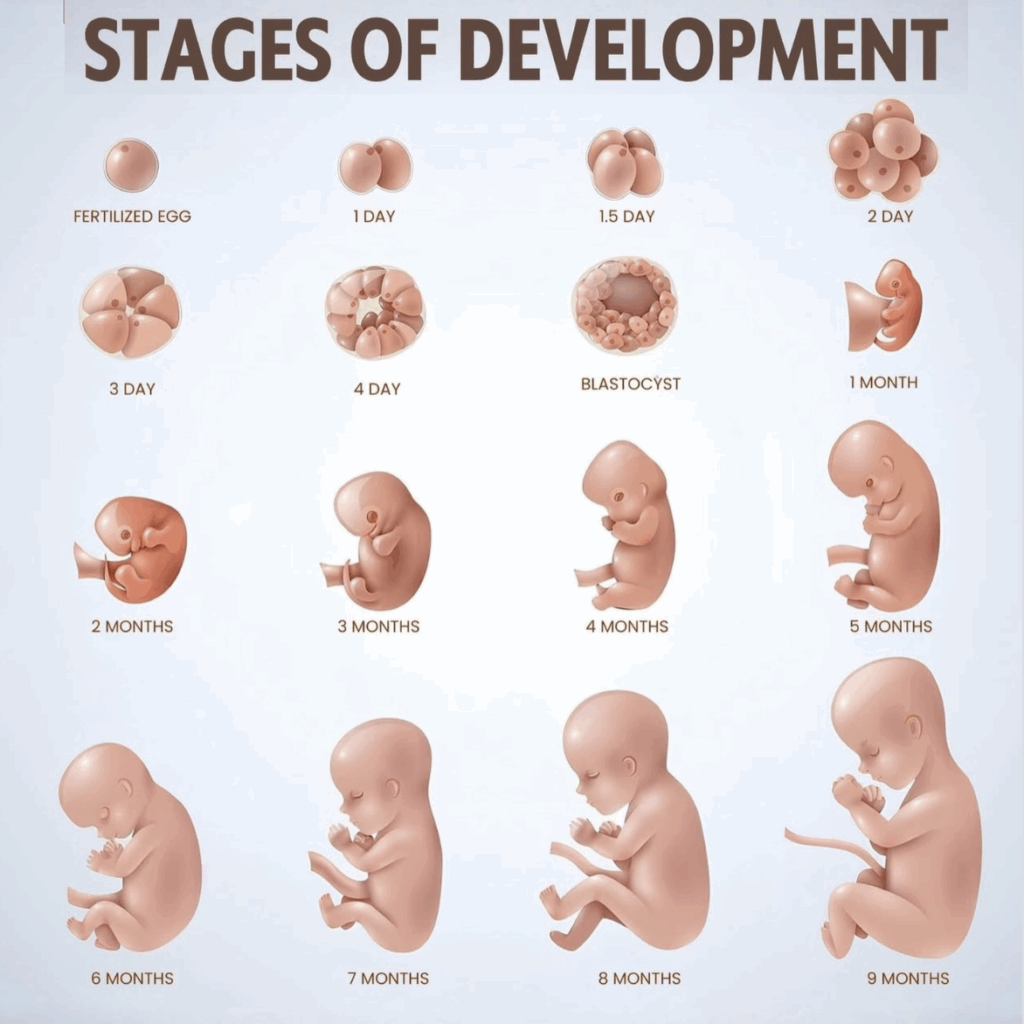
By 120 days (and even by 80 days), the embryo already has many human features and cannot be fairly characterized as a lump of flesh.
This raises two questions:
- Is the hadith authentic?
- If it is authentic, what does it mean? Is it possible to reconcile it with scientific knowledge?
Is the hadith authentic?
Chains of the Hadith
This hadith was narrated through two main routes from Zaid ibn Wahb from Abdullah ibn Masud (RA):
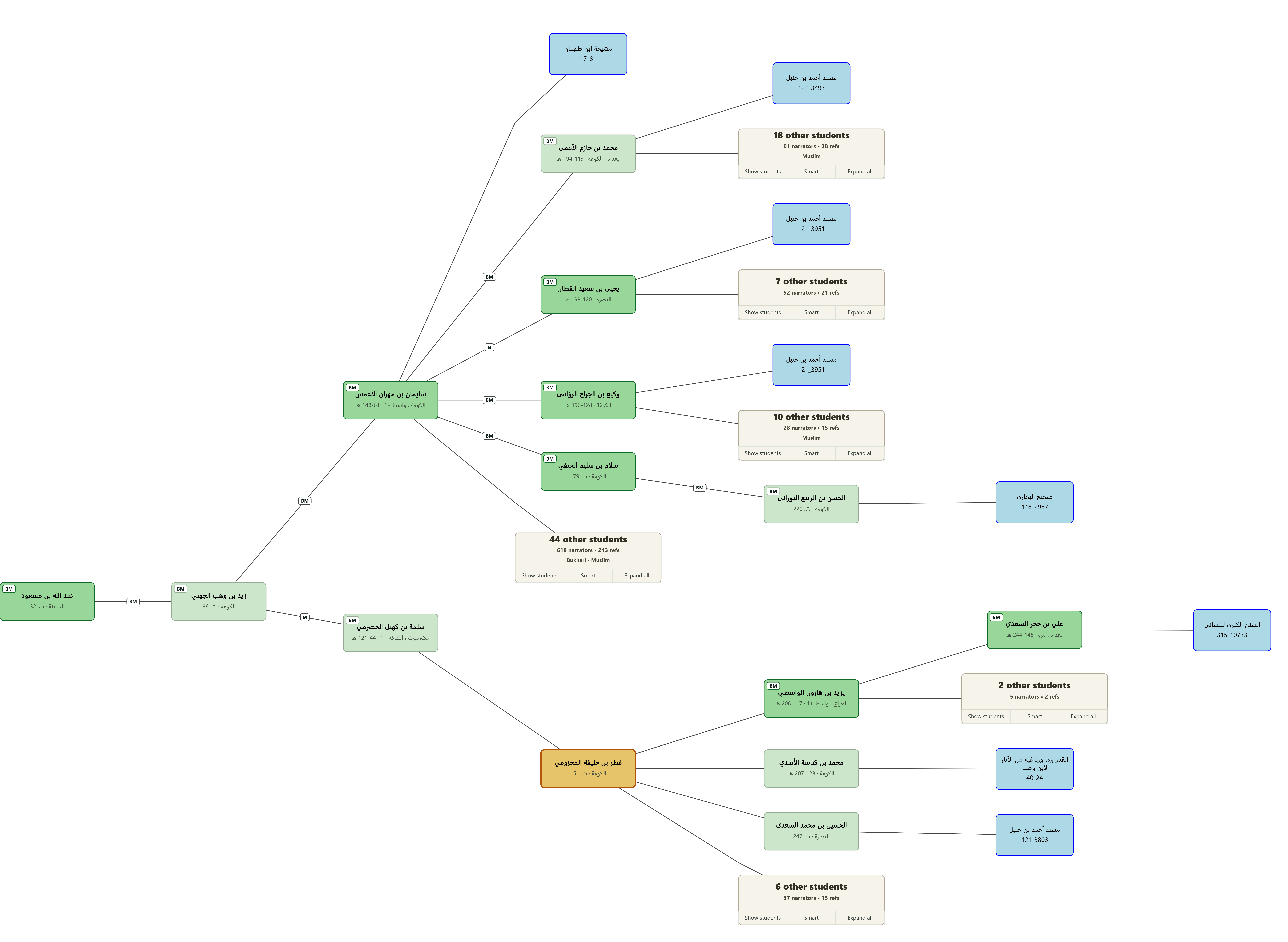
Zaid ibn Wahb was a reliable scholar and a student of Ibn Masud (RA).
A’mash said, “If Zaid ibn Wahb narrates something to you from someone, it is as if you heard it from that person yourself.” Ibn Maeen, Bayhaqi, and others considered him reliable. Bukhari and Muslim both narrated hadith from him in the Sahihayn.
Two students of Zaid narrated the hadith from him: 1) A’mash, and 2) Salamah ibn Kuhail through his student Fitr.
A’mash was an imam of hadith that needs no description. Shu’bah used to call A’mash “Mushaf” due to the strength of his memory, and Muhammad ibn Abdullah ibn Ammar al-Mowsili said, “None of the muhaddithun were more reliable than A’mash except Mansur.”
Salamah ibn Kuhail was also known to be very reliable. Imam Ahmad said, “He was mutqin (precise) in hadith.” Abd al-Rahman ibn Mahdi said, “There is no one more reliable in Kufa than four people,” then he mentioned Salamah as one of them.
Fitr ibn Khalifah, on the other hand, was criticized by some scholars. Abu Dawud said, “He is abandoned, and his hadith are not written down.” However, others were more positive about him. Ibn Maeen said he was reliable, and Abu Hatim said he was salih (ok) in hadith. In summary, he was an intermediate narrator who can be used for corroboration.
The chain of A’mash alone would have made this hadith Sahih and authentic, but the chain of Fitr supports the hadith of A’mash even more. So, the hadith is authentic.
That is why Imam Bukhari and Imam Muslim included the hadith in their respective Sahihs.
Hadith of Huzaifah
Huzaifah ibn Aseed (RA) narrated: The Prophet (SAW) said, “When 40 (or 42) days pass for a fetus, Allah sends an angel, so he shapes him, creates his hearing, sight, skin, flesh, and bones […]” (Sahih Muslim)
Abu al-Tufail Aamir ibn Wathilah narrated the hadith from Huzaifah:

Many people narrated the hadith from Abu al-Tufail.
Abu al-Tufail was a generally reliable narrator. Many scholars, including Ibn Hajr, said he met the Prophet (SAW). Some people criticized his reliability. Imam Muslim included many of his hadith in Sahih Muslim, but Bukhari did not include any of his hadith in Sahih Bukhari. In summary, he was a generally reliable, even if slightly mediocre, narrator.
As such, this hadith is Sahih, even if not to the level of the hadith of Ibn Masud (RA).
This hadith claims the fetus stays in the womb for 40 days before the angel comes, instead of the 120 days implied by the hadith of Ibn Masud (RA). As noted before, 40 days much more closely matches our knowledge of embryology.
Someone may ask: The hadith says the fetus is shaped and its sight, hearing, flesh, bones, etc. are created at 40 days, but we know this is not the case. So, what does that mean?
The answer is: As noted by many classical scholars, the meaning of that phrase is that those aspects of creation are planned out and set in motion at that time, not that they are fully created at the 40-day mark.
Preference Between the Two Hadith
Based on the chains and the traditional hadith evidence, the hadith of Ibn Masud (RA) is stronger than the hadith of Huzaifah (RA). However, I believe our external knowledge of embryonic development gives us reason to prefer the hadith of Huzaifah (RA) on this specific issue.
Someone may say: How can you prefer the hadith of Huzaifah over the hadith of Ibn Masud (RA) even though you just said it is more Sahih?
The answer is that this situation is different from one in which we have a single Sahih hadith and then reject it because of some external evidence. Here, we already have two Sahih hadith which, according to their apparent meanings, give us two different timelines.
If we only looked at the hadith evidence available to the classical scholars, the hadith of Ibn Masud (RA) should be preferred. Its transmission is stronger, and both Bukhari and Muslim included it in their Sahihs, while only Muslim included the hadith of Huzaifah (RA). So, the classical preference for the hadith of Ibn Masud (RA) was reasonable.
However, this is still a preference between two Sahih hadith. The hadith of Huzaifah (RA) does not become weak simply because the hadith of Ibn Masud (RA) is stronger. This means that even based on the hadith evidence alone, the conclusion of 120 days is not at the same level as it would be if there were one clear Sahih hadith with no authentic narration pointing towards another timeline.
Our modern knowledge of embryonic development then gives us a new piece of evidence to place on the scale. The hadith evidence by itself tips the scale towards the hadith of Ibn Masud (RA), but the scientific evidence strongly favors the timeline found in the hadith of Huzaifah (RA). In my opinion, this is enough to shift the preference towards the hadith of Huzaifah (RA).
In other words, we are not starting with one Sahih hadith and using science by itself to declare it wrong. We are starting with two Sahih hadith and asking which one is more likely to preserve the correct timeline. The classical scholars had good reason to prefer the hadith of Ibn Masud (RA) based on the evidence available to them, while additional evidence available to us can reasonably change that preference.
Solution to the Hadith of Ibn Masud (RA)
The hadith of Ibn Masud (RA) could have a mistake in two ways, one more extreme than the other.
First Option: The words are slightly mixed up in a way that they imply 120 days even though the Prophet (SAW) originally said words that imply 40 days.
This is possible because hadith were not always transmitted word-for-word. Narrators would often preserve the meaning and message of a hadith without necessarily preserving every exact word.
Think of yourself narrating something from a teacher. If needed, you might memorize the exact words, like in duas. But, most of the time, you would remember the meaning and message and narrate primarily based on your memory of that meaning.
When reliable narrators and scholars of Islam narrated hadith about the religion of Islam, its beliefs and commandments, they were reliable in preserving the meaning of those hadith even while paraphrasing, because those were topics they understood and knew about.
However, the narrators did not know much about embryonic development. So, they would have had less reason to notice if a small difference in the words changed the timeline of embryonic development while still preserving the main message of the hadith.
Someone may say: How is it possible for you to say one part of the hadith of Ibn Masud (RA) is inaccurate without negating the authenticity of the whole hadith?
The answer is: A hadith being Sahih does not mean every single word in the hadith has to be accurate. Reliable narrators can make mistakes in individual words or details while still accurately preserving the hadith as a whole.
There is a simple example of this in Sahih Bukhari. Anas (RA) narrated that the Prophet (SAW) would go around to his women in one period of time, and one narration says that they were eleven. Bukhari included this narration with a full chain as a primary hadith in his Sahih. However, immediately after narrating it, Bukhari pointed out that another transmission from Qatadah says that Anas actually said nine women instead of eleven. Bukhari also narrated the version of nine elsewhere in his Sahih with a full chain.
So, Bukhari could include the narration of eleven as a Sahih hadith while still correcting one particular detail in it through another transmission. The mistake in the number did not make the whole hadith inauthentic.
The same can be true for the hadith of Ibn Masud (RA). The hadith can still be Sahih and authentically traced back to the Prophet (SAW), while the exact words describing the timeline were not preserved completely accurately. Under this option, the words were slightly mixed up in transmission in a way that made them imply 120 days instead of 40.
This option can also be paired with one of the interpretations mentioned in the next section to determine what the original meaning of the hadith may have been before it reached this specific wording.
Second Option: The hadith of Ibn Masud (RA) as a whole was mistakenly attributed to the Prophet (SAW).
Another possibility is that the hadith did not originally come from the Prophet (SAW) at all. Perhaps some or all of it came from Ibn Masud (RA), Zaid ibn Wahb, or someone else in the chain, and was later mistakenly attributed to the Prophet (SAW).
However, I do not think there is enough evidence to prefer this option. The hadith is found in both Sahih Bukhari and Sahih Muslim with a strong and reliable chain. While even a hadith with a strong chain can theoretically contain a mistake in attribution, rejecting the attribution of the entire hadith requires much more evidence than questioning one particular detail in its wording.
This is especially the case when the first option already gives a reasonable explanation for the problem. We do not need to reject the entire hadith when a smaller mistake in transmission could explain why one part of it appears to give the wrong timeline.
So, although this second option is possible, I do not think there is enough reason to adopt it. The first option is both sufficient to resolve the problem and much more consistent with the strength of the hadith’s transmission.
What does the hadith mean?
To reconcile the hadith with our knowledge of science through interpretation, there are two parts of the hadith we can analyze more closely:
- The meaning of mithla zalik
- The meaning of alaqah and mudghah
Meaning of Mithla Zalik
The hadith says: “Each of your creation is assembled in the belly of your mother for forty days. Then, it becomes an alaqah (clinging substance) mithla zalik. Then, it becomes a mudghah (lump) mithla zalik. Then, Allah sends an angel…”
The literal meaning of mithla zalik is “like that.”
The common interpretation is that it means in this context, “for a similar amount of time” i.e. another forty days.
There are a few alternative explanations of mithla zalik and the given sentence, all of them intended to reduce the time from 120 to 40 days.
Firstly, some scholars said mithla zalik means “in the same period,” referring back to the forty days mentioned in the beginning of the hadith. So, they said the stages of alaqah and mudghah occur within a forty day period, then the angel comes. This explanation was proposed among the classical scholars by Ibn Zamalkani (d. 1204 AD) and is also recorded in Ibn Hajr’s commentary of Sahih Bukhari, although Ibn Hajr did not prefer it.
Within this same line of thought, some people said mithla zalik indicates uncertainty about the exact number of the forty days. Meaning, “in around that.”
So, the full sentences would be: “Each of your creation is assembled in the belly of your mother for forty days. Then, it becomes an alaqah in that around 40 days. Then, it becomes a mudghah (lump) in that around 40 days.”
I found this explanation unconvincing for two reasons: 1) There is no reason to say mithla (like/similar) if the meaning was to refer to the original 40 days. The hadith should have said something like fi zalik i.e. “in that [forty days].” 2) There would be no reason to repeat mithla zalik after both stages if the purpose was to refer to one group of 40 days.
Some scholars of this view responded: It is possible some of the narrators slightly mixed up the exact words of the hadith.
Secondly, I believe it is possible mithla zalik means “in that state” i.e. in the state of being assembled in the belly of your mother without having the soul blown into it.
So, the full sentences would be: “Each of your creation is assembled in the belly of your mother for forty days. Then, it becomes an alaqah in that state. Then, it becomes a mudghah (lump) in that state. Then, Allah sends an angel…”
I believe this is one of the stronger interpretations.
Someone may say: How can you say the stages of alaqah and mudghah occur within the first forty days even though the hadith says thumma “then” when mentioning them? The hadith says, “Each of your creation is assembled in the belly of your mother for forty days. Then (thumma), it becomes an alaqah […]” Does that not imply that those stages occur after the forty days?
First Answer: It is possible thumma “then” is used to mean “and.” This is possible in Arabic, with the implication “X, then, [I also want to mention] Y,” where no chronology is implied between X and Y. For example, in the Quran, when describing an evil man, ⟪Woe to you, and woe! Then, woe to you and woe.⟫ (75:34-35) The “then” implies no chronology in the verse.
Second Answer: It is possible the “then” refers to “your creation is assembled,” not to the forty days. So, perhaps, the sentence is structured in a way that the forty days are mentioned first because that is the message, then the latter sentences about the alaqah and mudghah are meant to elaborate on the assembly in the belly of the mother. So, ordered chronologically, it would be: “Each of your creation is assembled in the belly of your mother. Then, it becomes an alaqah in that state. Then, it becomes a mudghah (lump) in that state. All for forty days. Then, Allah sends an angel…”
Third Answer: There could be a mistake in the exact words of the hadith, as mentioned before. Perhaps, the word “then” was not originally part of the hadith and whoever made the mistake was influenced by the verse in the Quran ⟪We created you from dust, then from a nutfah, then from an alaqah, then from a mudghah, formed and unformed⟫ (22:5). Perhaps, the sentences were misordered by one of the narrators by mistake. Both of these are relatively minor changes that someone who did not know embryonic development may not have been wary enough to avoid.
Meaning of Alaqah and Mudghah
The alternative line of interpretation is to say alaqah and mudghah in the hadith mean something other than what is usually understood by those words.
Perhaps, the alaqah (clinging thing) does refer to the state of the fetus after 40 days, and perhaps, the mudghah (lump) does refer to the state of the fetus after 80 days.
The main problem in interpreting the words like this is that Allah says ⟪Then We made the sperm-drop into an alaqah, and We made the clot into a mudghah, and We made [from] the mudghah, bones, and We covered the bones with flesh; then We developed him into another creation.⟫ (23:14)
The verse strongly indicates that the creation of flesh and bones post-date the period of being mudghah, and flesh and bones do not only develop after 80 days or 120 days.
That is a difficulty for this interpretation, but still does not rule it out entirely, since it is possible to say the creation of bones and flesh refers to their extensive development until the baby is born, not to the initial stages that happen before 120 days.
Another problem for the interpretation is that the stages are defined post hoc and do not correlate with any particularly known stage of embryonic development, unlike if all three stages happened within 40 days.
Conclusion
In conclusion, there are several solutions to the problem posed by the hadith of Ibn Masud (RA), both from the perspective of its authenticity and from the perspective of its meaning.
There are two solutions I believe are the best:
- The words of the hadith of Ibn Masud (RA) were slightly mixed up by the narrators to accidentally imply 120 days instead of the original 40 from the Prophet (SAW)
- The meaning of mithla zalik is “in that state” and thumma means “and.” Each stage is simply described as being in the state of assembly in the mother’s belly, not anything about time or chronology.
Two solutions are viable but not convincing to me:
- The meaning of mithla zalik is “in around the same 40 days” referring to the first 40 days mentioned in the hadith. So, all stages of development happen within 40 days.
- The meaning of alaqah is whatever the fetus is at 40 days, and the meaning of mudghah is whatever the fetus is at 80 days.
The other solutions, in my opinion, are not useful. And Allah knows best.
